

Latest post:
- 2024 Year End Blog
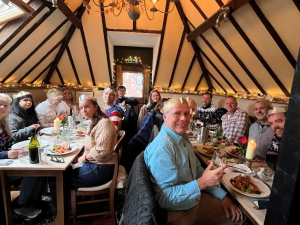 This is the last terra firma year end blog that I will do, given I retire next spring. Something both sad and exciting at the same time. Plans are in place for a great celebration as it will coincide with the company’s 40th birthday May 1st 2025 and we will be marking it with a… Read more: 2024 Year End Blog
Blog Archive:
- 2024 Year End BlogThis is the last terra firma year end blog that I will do, given I retire next spring. Something both sad and exciting at the same time. Plans are in place for a great celebration as it will coincide with the company’s 40th birthday May 1st 2025 and we will… Read more: 2024 Year End Blog
- How much notice do you take of trees?Should we be paying more attention to our surroundings and the trees we come into contact either during site visits or just going about our day to day business? Do the trees we see look in good health? TreeAlert is managed by Forest Research and is the online tool for… Read more: How much notice do you take of trees?
- A Visit to Chatsworth, Derbyshire – Restoring the Cascade
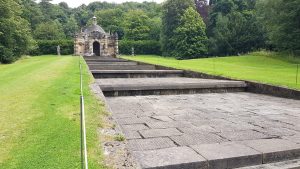 At terra firma we have been fortunate to work on projects in the heritage sector that bring a range of specialist skills together. We often lead and collaborate with archaeologists, heritage architects, drainage engineers and heritage communication specialists, many of whom have become valued and trusted colleagues. These projects may… Read more: A Visit to Chatsworth, Derbyshire – Restoring the Cascade
 - Fantastic Beasts and Where to find them…
 Britain is home to a rare species – one that is found in ponds during spring but for the rest of the year wanders amidst fields, woodlands and hedges. No, I’m not referring to the protected Great Crested Newt but the equally rare ‘Registered Consultant’ Ecologist that surveys such places… Read more: Fantastic Beasts and Where to find them…
 - Be Nice To Nettles Week
 Urtica dioica, the common stinging nettle, is a UK native considered to be a weed and not a plant people often aim to include in their gardens. However, since it is ‘Be Nice to Nettles’ week (May 14-25th) and RHS Chelsea Flower Show (May 21- 26th), here’s a few ways… Read more: Be Nice To Nettles Week
 - Building a ‘humanitarian landscape’
 This month’s guest blog comes from the Humanitarian Landscape Collective (HLC), who came to the office in February to deliver a CPD on their mission & research on getting landscape architects more involved with international development work. First of all we’d like to thank terra firma for inviting us to… Read more: Building a ‘humanitarian landscape’
 - I have the best job in the world!
 Quite a claim I know but working in the field of landscape architecture – and most especially with the wonderful people at terra firma – is a thing which I absolutely love. It would be selfish of me not to share my passion – there is so much opportunity within… Read more: I have the best job in the world!
 - MBTI Session
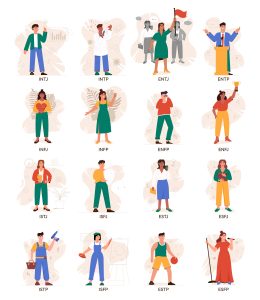 By Nasrin Chowdhury Humans are unique in their own little ways and appreciating the nuances of that is what helps us tackle and thrive in society. Recently, our team had a productive day of team building with KSL Training, where we learned about our own and our colleagues’ personality traits… Read more: MBTI Session
 - Question to the team…
 2023 – The Last Post of the Year
 - Circular Economy in Landscape Architecture
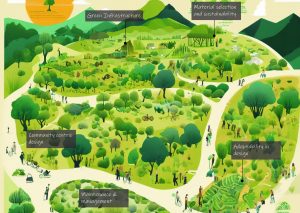 In today’s world, with the growing crisis of climate change, the need to adapt to more sustainable practices, especially in the built environment and landscape, has become a necessity. Circular economy focuses on eliminating waste, reducing pollution, circulating products and materials, and leaving room for biodiversity to thrive by regenerating… Read more: <strong>Circular Economy in Landscape Architecture</strong>
 - A talk to RIBA South Conservation Group Wednesday September 13th 2023
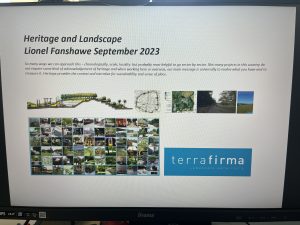 I was honoured to have been invited to give an online presentation to the RIBA South Conservation Group last week. Although exact number of attendees was hard to calculate , over 200 had signed up on Eventbrite in advance and it felt a very worthwhile thing to do. I understand… Read more: A talk to RIBA South Conservation Group Wednesday September 13th 2023
 - Participatory Design: Turning Petersfield’s Water Meadow into People’s Meadow
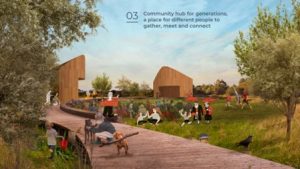 An ambitious local project in Petersfield, named “Water Meadow to People’s Meadow.” shows the power of participatory design and how it is done. The objective was to transform a neglected 5-hectare piece of land currently owned by Tesco into a vibrant communal space.
 - 15 minute cities
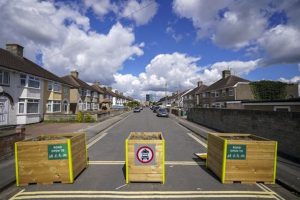 There has been much talk in the news recently about ’15 minute cities’ otherwise known as 20 minute neighbourhoods. The concept, created by French-Colombian Urbanist Carlos Moreno, is about creating communities whereby residents can access key amenities, such as shops, health services, employment and natural spaces in no more than… Read more: 15 minute cities
 - Volunteer replanting at Phyllis Tuckwell Hospice
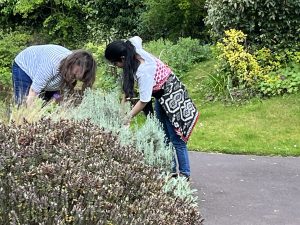 It’s great to be out the office away from the desk from time to time and what better reason is there than volunteering help with replanting shrubs in a beautifully planted garden on a sunny afternoon in May! On the 16th May a few of the terra firma team made… Read more: Volunteer replanting at Phyllis Tuckwell Hospice
 - Say ‘no’ to plastic plants & grassSome of you may have seen in recent social media posts, there has been a campaign spearheaded by the Society of Garden Designers (SGD) to discourage the use of plastic plants and grass. This has been supported and endorsed by the Landscape Institute (LI) with high profile members making public… Read more: Say ‘no’ to plastic plants & grass
- New blood needed – call to arms….
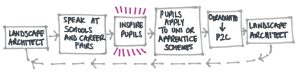 Whilst I am a regular a blood donor (and that’s a grand thing to do – sign up here:- Home – NHS Blood Donation) I’m not on about that. I’m on about careers. Having recently recruited it is clear that, whilst great candidates are out there, numbers applying for jobs… Read more: <strong>New blood needed – call to arms….</strong>
 - 10 done in 22 and 10 to do in 23!
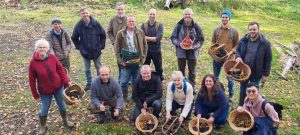 2022 has been a busy year for us at terra firma in many ways – challenging, exciting and sometimes unpredictable. We hope that 2023 will bring new projects, events and initiatives and we know it will continue to be exciting and challenging. A massive thank you from terra firma directors,… Read more: 10 done in 22 and 10 to do in 23!
 - What is this stuff?
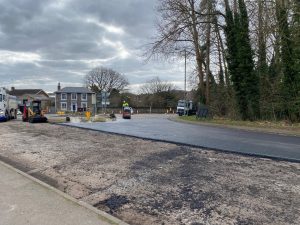 We all come across this everyday whether on foot or while driving yet there are various terms to describe the same thing, so what is it? Tarmac, tarmacadam, bitmac or asphalt? The good news is that they are, as far as landscape is concerned, relatively all the same. A surface… Read more: What is this stuff?
 - Heritage Apple Revival
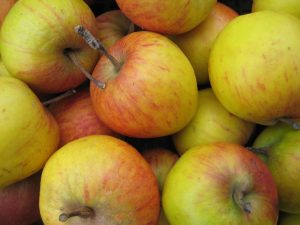 I have an apple tree on my allotment that produces huge amounts of delicious apples every other year, but I have no idea what variety it is. It was already a mature tree when I took on the plot and has possibly been there since the allotments were first created… Read more: Heritage Apple Revival
 - The new normal?
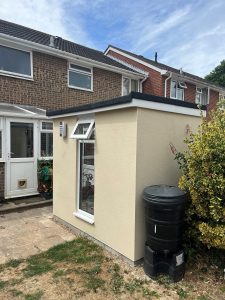 Back in early 2020 if you’d have said to me there’d come a time when I’d be writing blogs whilst sitting at a desk in my garden I’d think you were mad. But here I am. This blog comes to you from my shiny new garden office. I think most… Read more: The new normal?
 - A visit to Rotterdam
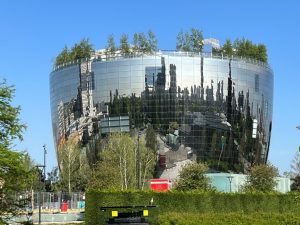 On the 13th May some of the terra firma team, along with some invited guests, embarked from St Pancras International on the Eurostar destined for Rotterdam – a trip to celebrate terra firma’s 35th birthday (although this year it’s the 37th!). The trip was a long time in the planning,… Read more: A visit to Rotterdam
 - Sutton Hoo awarded RIBA East Award
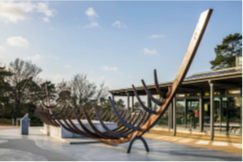 Judged and presented locally, RIBA Regional Awards celebrate great architecture across the UK. You can view the project on the RIBA website, here. The terra firma team, headed by Lionel Fanshawe and Alice Cooper, brought together and managed several consultant disciplines, including Nexus Heritage, Diversity Ecology, Arborist, and landscape historian.… Read more: Sutton Hoo awarded RIBA East Award
 - Olmsted 200
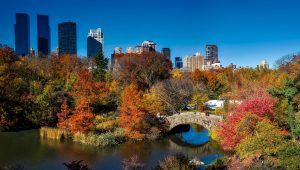 The role of Landscape Architects in designing spaces for our communities and continuing Olmsted’s legacy is important and should be celebrated – throughout the whole of April!
 - What makes a good landscape architect?
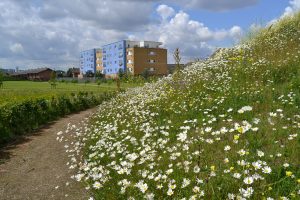 It is another usual day in the office. We sit down after 40 minutes of commuting, in front of the computer loaded with 150 unread emails, a few unresponded meeting requests. We then take a sip of freshly-brewed coffee before we start drawing a series of polylines in CAD to… Read more: What makes a good landscape architect?
 - Productive Landscapes in the Public Realm
 We are pleased to introduce Rachel Hammond, founder of EDGE, which designs and installs edible and productive landscapes across the UK, creating functional yet beautiful low-maintenance outdoor spaces for retail and business parks, offices, hotels, housing, and gardens. What is a productive landscape? Productive landscapes could be interpreted in a… Read more: Productive Landscapes in the Public Realm
 - Details matter
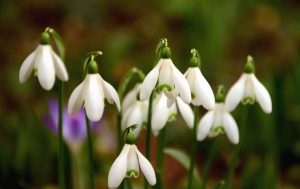 In a previous blog, I wrote about the joy of seeing spring bulbs after the dark days of winter. By chance, as I was planning this blog, the new catalogue from Avon Bulbs was delivered. Spring isn’t the usual time for bulb catalogues, but this was filled with bulbs for… Read more: Details matter
 - Lionel’s End of Year Blog
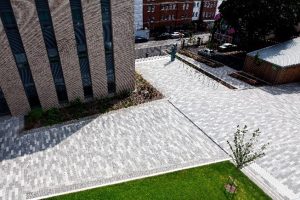 In spite the continuation of COVID, this has again been a really good and busy year for the firm. This has been the first year of running as three equity directors and has been a joy to share the load – though it does not seem to lessen. We have… Read more: Lionel’s End of Year Blog
 - Biodiversity Net Gain
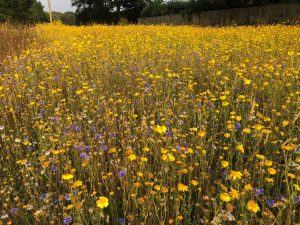 by Paul Whitby, The Ecology Co-op What does it mean for development and when will it be required? Biodiversity Net Gain (BNG) has caused some controversy both in ecology and development as a whole. The principle of trying to calculate the biodiversity value of a plot of land pre-development and… Read more: Biodiversity Net Gain
 - Trees matter!
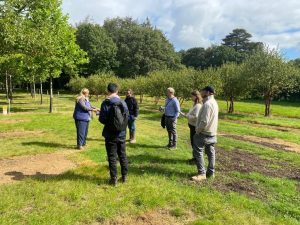 Recently, we visited a local tree nursery as a team day out. It was a good experience, not only because we finally could get together as a team after a long period of lockdown, but also because of some key takeaways that I was able to learn from the perspective… Read more: Trees matter!
 - It’s a bug’s life
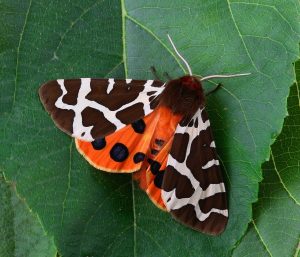 It is tough being a bug, whether it is avoiding being eaten, squashed underfoot or being captured and dispatched by any number of ways devised by humans to eliminate the flying insect population. Not only that, but when your lifespan can last anything from 24 hours to one month, you… Read more: It’s a bug’s life
 - A ‘SlowWay’ to appreciate where we live
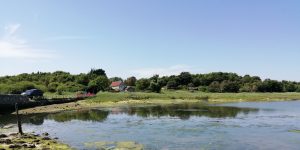 Alice’s coast-to-coast walk on the Isle of Wight Enjoy a good walk? Then why not help to review a national walking network! If you have not already come across the ‘SlowWays’ community initiative – https://beta.slowways.org/ The initiative is designed to create a network of off-road walking routes connecting the UK’s cities,… Read more: A ‘SlowWay’ to appreciate where we live
 - Re-shaping and revitalising landscapes for the future
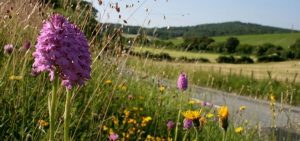 Re-winding to just over a year ago I reflected on the importance of landscape within the unprecedented times the world had only just, at that time, been thrown into. With the impact the pandemic has had and is continuing to have on everyone’s lives it’s still, understandably, a hot topic… Read more: Re-shaping and revitalising landscapes for the future
 - Where land meets waterDuring this month’s Mental Health Awareness Week (between the 10th and 16th May) I have been thinking about the therapeutic role that landscape can play for people whose mental wellbeing is suffering in some way. This past year has been tough at times for many people, and there have been… Read more: Where land meets water
- Unlocking the Urban Coastline – The North Portsea Island Scheme
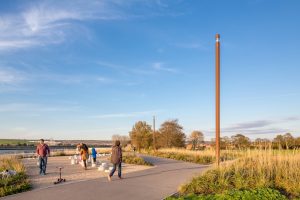 In recent years Portsmouth has been overhauling the sea defences that protect England’s only island city from coastal erosion and flooding. The North Portsea Island Scheme, costing £58m spans 8.4km from the Mountbatten Centre at Tipner Lake round the north of the island through to Milton Common. Once all phases… Read more: Unlocking the Urban Coastline – The North Portsea Island Scheme
 - Planting Distance Calculation
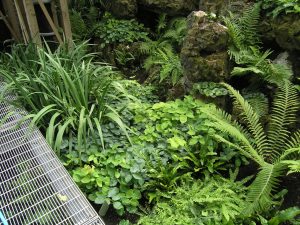 We often slip into a rut in our calculations and do not realise we are making a mistake until somebody else looks or checks our calculations. The same may be said about planting calculations and the number of plants in any selected planting area.
 - The ‘Trigger’s Broom’ philosophy
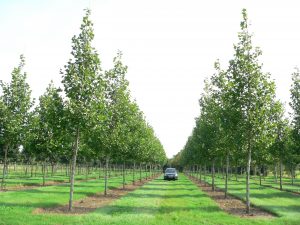 Red rag to a bull. I am a landscape architect and so you will be unsurprised at my response comment of ‘not sure trees get in the way… maybe the designs need rethinking to work with them’. Quick retaliatory recovery from the architect ‘you are right – some of the most interesting projects as as a result of site constraints’.
 - How landscapes learn
 The story begins whenever I introduce myself as a landscape architect, either people are confused about what a landscape architect does or don’t even know this job exists.
 - End of Year Blog
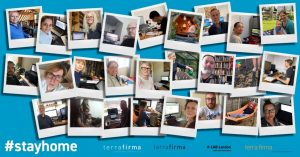 Our team at tf has been brilliant and was quick to adjust to remote working. This could not have been done without the ever-attentive, sure-footed technical support from CYAN. We were very sad to lose Tom Jenner at the beginning of the year after so many good years with us, but pleased to see him flourishing in a completely new field.
 - Losing touch
 During June and July 2020 BBC radio 4 broadcast a series of episodes on the theme of Rethink; how the world should change after the coronavirus pandemic. These covered a fascinating range of topics presented by an eclectic list of people; from the Dalai Lama on ancient wisdom, to Andy… Read more: Losing touch
 - A time for space
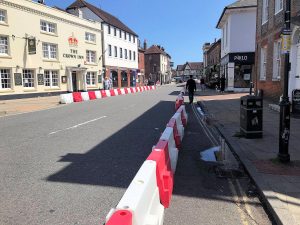 Recently we have become accustomed to the term ‘social distancing’ but prior to the start of the current pandemic this was not the norm for us. We are inherently social beings and as landscape architects we spend our working life striving to create meaningful open spaces that are often shared together.